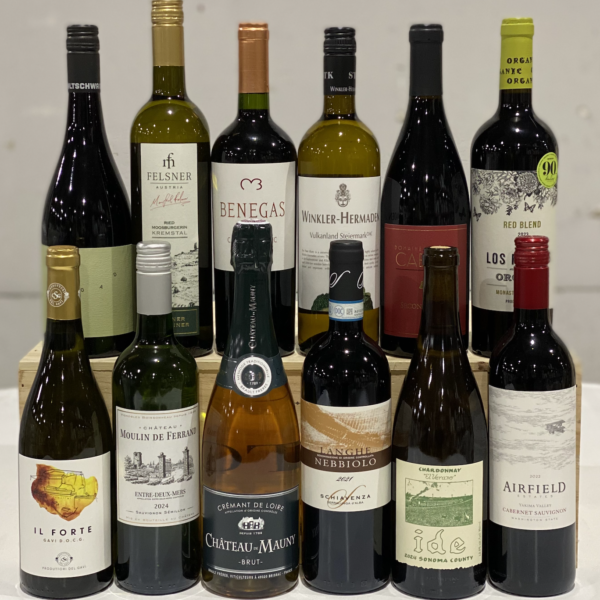

Weingut Felsner 2023 Grüner Veltliner “Moosburgerin” Manfred Felsner cultivates 15 hectares of vineyards from some of the Kremstal wine region’s most expressive sites, all surrounding the picturesque villages of Rohrendorf and Gedersdorf. Unusually old vineyard stock is what sets Felsner apart from their creative/indie Austrian peers. More than half of Felsner’s Gruner Veltliner parcels are classified as “old vine,” and most of these root 30+ feet deep, adding an extract and substance to finished wine that has to be experienced to be believed. Lovely white peach, melon and floral flavors. A pleasant, refreshing and easy going wine, and a prime example of Grüner Veltliner at an attractive price. This food-loving wine works with dishes from sushi to roast pork.
Winkler-Hermaden 2023 Pinot Blanc The Winkler-Hermaden Winery, located in the heart of the Styrian Vulkanland region in southeastern Austria, has been a family-run business since 1918. Situated near the Slovenian and Hungarian borders, the estate spans 38 hectares of organically farmed vineyards, focusing on sustainability and terroir-driven wines. Crafted at the estate, this Pinot Blanc embodies the region’s cool climate and volcanic soils. This vintage is light and refreshing with notes of green apple, white peach, and chamomile. A soft mouthfeel and balanced acidity make it a versatile pairing for salads, light seafood, or soft cheeses.
Château Moulin Ferrand 2024 Bordeaux Blanc Eleanor of Aquitaine (then Queen of England) ordered monks to plant the first vines on this 72-hectare estate in 1150. The property stretches over the right bank of the Garonne river across the hillsides of Saint Michel de Lapujade, and benefits from the mild and humid air that rises up from the sea and travels down the Garonne valley. Pierre Boissonneau purchased the property in 1839, and descendants Christian, Pascal, Phillippe, and Nico have transformed it into one of the best places in Bordeaux for value-driven organic wine. Moulin de Ferrand has long been a staple for us here at Vino and if you aren’t yet familiar with these it is about time you climb aboard the train. The 2019 Blanc is composed of 40% Semillon, 30% Sauvignon Blanc, 20% Sauvignon Gris and finally 10% Muscadelle. It shows floral and citrus aromas on the nose while the mouth is balanced with mineral notes, round, clean with lots of freshness. A beautiful aromatic and crisp finish.
Produttori del Gavi 2024 “Il Forte” Gavi DOCG Newest and freshest vintage! You could call Gavi the “queen” of Piedmont’s white wines – Gavi must be made from the local varietal Cortese, and Cortese translates to “gracious” in Italian. Cortese has thin skins, naturally high acid, and it needs a warm climate to grow in. Nowhere does it grow better than in Southeastern Piedmont just North of the Ligurian coast. At its best Cortese is bone dry with lemon/peach flavors. Add in some seafood and you are instantly transported to a very happy place. This 2019 is intense straw-yellow in color. Fruity scents of peach lead with a light almond note, extremely fine and delicate stuff here. Very fresh and lively in the mouth thanks to its good acidity and due to its creamy texture on the palate, it matches surprisingly well with red-meat dishes!
Ide Wines 2024 Chardonnay Sonoma County Ide Wines is a Sonoma-based winery known for producing a range of wines, including Sauvignon Blanc, Chardonnay, and Pinot Noir, with a focus on showcasing the unique character of the Sonoma region. The grapes are sourced from Sonoma County’s 19 distinctive viticultural growing areas. This ide “El Verano” Chardonnay is hand-picked sourcing from Sonoma County, allowing ide Wines to obtain the best grapes from one vintage to the next. Classically styled, with aromas of juicy tropical fruit underlined by flavors of Honeycrisp apple and vanilla spice in the background. Sunshine in a glass!
Château de Mauny 2020 Crémant de Loire ‘Brut Rosé’ We came across Château Mauny’s Cremant during a trip in the Loire several years ago. The vineyard located west of Brissac-Quincé was acquired by the Brault family at the end of the 18th century, who have been running the estate ever since. In 1951, they were among the first winegrowers to create the Brissac cooperative with whom they are associated. Today, the family produces a wide range of Anjou AOC wines and is strongly committed to sustainable agriculture and biodiversity conservation. This example is produced from Chenin Blanc (80%) and Grolleau (20%), both of which are sourced from sustainably-grown vineyards in a 125 hectare spread due West of Brissac-Quincé in Anjou. Elevage is methode traditionelle for tight, small, frothy bubbles!
Thank you for your support of the family winegrowers we work with!